Avoid Using Carbamates
in Your Flea Control Efforts
The NRDC has "asked the (US) EPA to consider banning pet products containing carbamates..."
General Information
Carbamates can be found in all types of pet products. Their toxic effect is immediate, but is generally less severe than the effects of organophosphates.
If you decide you must use a flea control product containing these chemicals, be sure to read the label and follow the directions exactly as written or as recommended by your trusted veterinarian.
Besides killing fleas, these insecticides are also toxic to humans and to your cat. The National Resources Defense Council recommends that pregnant women and families with children should not be exposed to this chemical or organophosphates.
Side Effects on Your Cat's Health
If you choose to use a flea control product with this insecticide, you must carefully watch your cat for any signs of illness.
The following symptoms are initial signs of an overdose or the possible side effects of long-term use on your cat:
- increased salivation
- involuntary defecation
- urination
- vomiting
- wobbliness
- taking a wide stance
These symptoms may progress to a difficulty in standing, weakness, convulsions, tremors, constricted pupils, teary eyes, slow heartbeat, and labored breathing.
This flea insecticide may also cause depression of bone marrow and degeneration of the brain.
How to Find Carbamates on Flea Control Labels
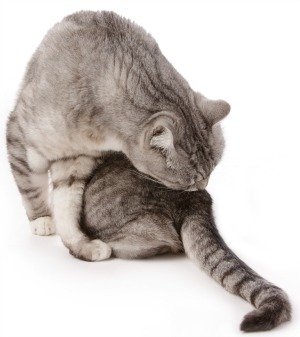 Cat Licking at Biting Fleas
This poison is listed on the labels of flea control products as Aldicarb (Temik), Baygon, Bendiocarb, Bufencarb (BUX), Carbaryl (Sevin), Carbofuran (Brifur, Curaterr, Furadan, Sunfuran), Ficam, and various Methylcarbamate compounds, Moban, Maneb, Propoxur, Zecrtran, Zineb, and Ziram.
Two of the most common carbamate chemicals used in flea control products are carbaryl and propoxur. The NRDC highly recommends avoiding products with these chemicals.
Safer Alternatives for Flea Control
Natural flea control products are generally the safest to choose to keep your cat safe from the toxic effects of insecticides and other dangerous chemicals.
Natural flea control methods are often best in preventing flea problems. If you find you must use additional methods, flea products containing "insect growth regulators" or "IGRs" are the next safest method to control fleas.
Amazon carries a variety of popular over-the-counter flea medicines at (usually) the cheapest prices online.
Related Articles
Other Common Flea Insecticides - More information about commonly used insecticides in pet products.
All About Flea Control - Article with info on flea control and keeping your kitty safe from fleas.
Didn't find what you were looking for? Use the Google search box for more feline health information.
From Carbamates to My Healthy Cat home
If you suspect your cat is ill, please contact your veterinarian immediately.
The material presented in this site is for informational and entertainment purposes only. It is not intended to replace your veterinarian's advice.
Copyright 2003-2023 © www.myhealthycat.com
Sitemap | Contact Us | About Us | Disclosure | Privacy Policy